

SMS Bombing Protection: Secure Your Number from SMS Bombing Attacks in 2026
Your phone suddenly fills up with dozens of OTP messages within minutes? No need to worry; a solution is available for your problem. This is not a random glitch; someone has intentionally targeted your number for a prank. SMS bombing protection is something every smartphone user needs to understand today because these attacks are becoming more common, more irritating, and, in serious cases, a genuine risk.
This guide covers everything you need to know about the attack, why it happens, and sms bombing protection, and how to keep your number safe for the long term.
What Is SMS Bombing and Why Does It Happen?
SMS bombing is a type of spam attack where a phone number receives a flood of text messages, OTP codes, or verification requests in a very short time. These messages typically come from hundreds of different websites and apps, all triggered at once by an automated tool.
The thing that most people are unaware of is that the attacker does not actually send the messages. Instead, they use automated software to sign you up across hundreds of platforms simultaneously. Each platform then sends you a verification code, and your inbox drowns.
Common signs of an SMS bombing attack
- Dozens of OTP messages are arriving within minutes from unknown services
- Verification codes from apps and websites you never registered on
- Constant notification sounds make your phone unusable
- Unexpected battery drain and phone slowdowns from background message processing
Some people treat this as a harmless prank. It is not. Beyond the frustration, a flood of messages can be used to distract you while a real account takeover attempt is happening in the background.
Why Your Phone Number Needs Better sms bombing Protection?
Your phone number is the master key to your digital life. It is linked to your banking apps, email accounts, social media profiles, and government portals. Once it lands in the wrong hands through a data breach, a public post, or a careless online registration, it becomes a target.
Protecting your number reduces exposure to spam, phishing attempts, repeated SMS bombing attacks, scam calls, and privacy violations. Strong digital habits built around your number are one of the most effective things you can do for your overall online security.
SMS Bombing Protection Tips
7 verified ways for sms bombing protection to protect your phone number from spam, OTP flooding, and unwanted messages.
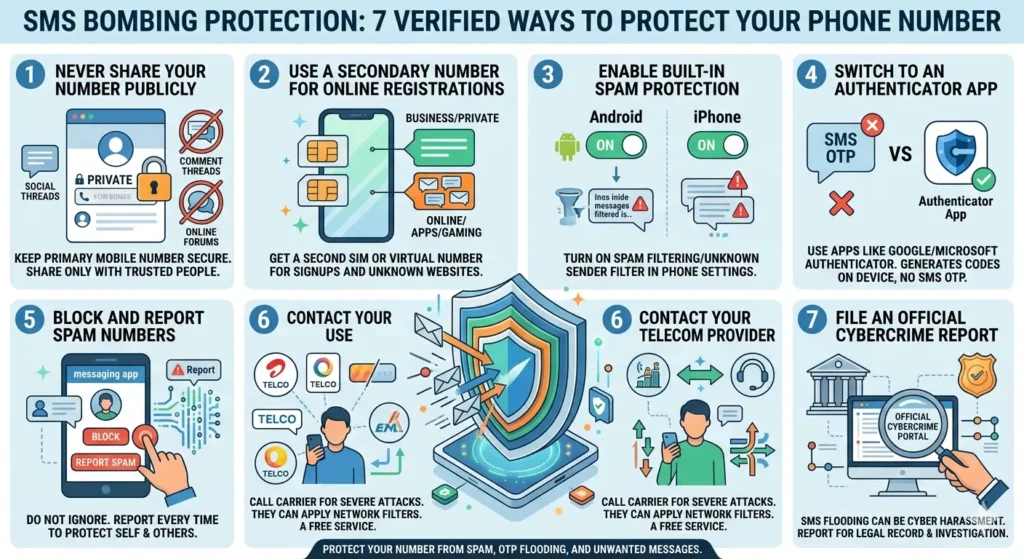
1. Never Share Your Number Publicly
The most common mistake people commit is disclosing their mobile number in social media profiles, online forums, comment threads, or giveaways.
Always keep your primary mobile number secure. Share it only with people you can trust.
2. Use a Secondary Number for online Registrations
Get a second SIM card or a virtual number specifically for online signups, app registrations, gaming platforms, and unknown websites. This keeps your real number completely separate from the internet’s noise.
Most telecom providers offer affordable second SIM options. This single habit eliminates a huge percentage of spam risk.
3. Enable Built-in Spam Protection
Both Android and iPhone now include powerful built-in spam filters. These automatically detect suspicious messages and block unknown senders before they reach your main inbox.
Go to your phone settings and enable spam protection or filter unknown senders. It takes thirty seconds and works around the clock.
4. Switch to an Authenticator App
SMS-based verification is the weakest link in account security, and it is exactly what SMS bombing protection is designed to address. Authenticator apps like Google Authenticator or Microsoft Authenticator generate codes directly on your device without using your phone number at all.
Wherever a service offers this option, choose it over SMS OTP. It is more secure and completely unaffected by any bombing attack.
5. Block and Report Spam number
If specific numbers keep sending messages, block them instantly from your messaging app. Always tap “Report Spam” alongside blocking; this sends data to your carrier and helps protect other users from the same sender.
Do not just ignore spam. Report it every time.
6. Contact Your Telecom Provider
When the attack is severe, and your phone becomes practically unusable, call your mobile carrier directly. Network providers can place temporary filters on your number, block suspicious inbound traffic patterns, and flag your account for monitoring.
This is a free service; use it without hesitation.
7. File an Official Cybercrime Report
In many countries, repeated SMS flooding qualifies as cyber harassment under digital crime laws. Report it through your country’s official cybercrime portal. This creates a legal record and, in serious cases, can trigger an investigation against the attacker.
Reporting protects you and helps authorities track patterns of abuse.
Safe Practices: SMS bombing protection
Stopping one attack is not enough. Building the right habits ensures you stay protected long term.
- Never share your OTP with anyone. Even a friend, not a “bank representative”, not anyone. Verification codes are private by design.
- Avoid suspicious websites asking for phone verification on unknown platforms that demand your number for a free prize or exclusive access; they are almost always harvesting numbers for spam campaigns.
- Keep your apps and operating system updated; security patches released in updates close vulnerabilities that spammers actively exploit.
- Use strong passwords and two-factor authentication secure your Gmail, social media, and banking accounts independently of your phone number so that even if your number is compromised, your accounts stay safe.
Conclusion
SMS bombing protection is not difficult, but it does require awareness and a few smart habits. Keep your number private, use secondary numbers for online registrations, switch to authenticator apps, and report any attack that crosses the line into harassment. Your phone number is linked to everything important in your life. Think of it that way.